
 MentorX
 23
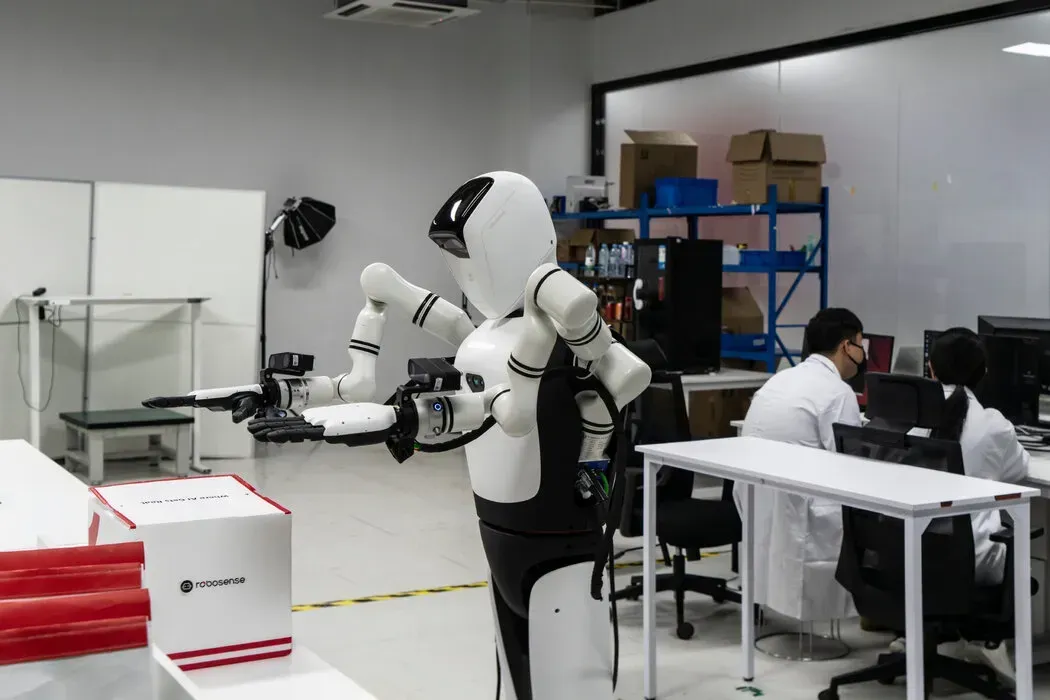
Recently, remarks by Tsinghua University Professor Nie Huihua arguing that robots and AI should be taxed have sparked renewed attention.
Humans toil away at work and pay taxes.
AI works nonstop, 24 hours a day.
Yet it owes no social security contributions?
A Tsinghua professor is calling for a tax on AI.
Recently, remarks previously made by Tsinghua University Professor Nie Huihua advocating for taxes on robots and artificial intelligence have sparked renewed public attention.
His reasoning is straightforward: when companies hire human workers, they must pay salaries, contribute to social security, and cover a wide range of employment-related costs. Switching to robots or AI, by contrast, can boost efficiency while slashing massive labor expenses.
This raises a wry yet deeply practical question: humans grind through job searches and work days only to pay taxes, while AI takes over jobs and effectively enjoys legal "tax avoidance"?
An AI tax remains merely an academic policy proposal for now. Beneath this debate lies a stark reality facing every job seeker: the economics of corporate staffing have fundamentally shifted.
01 Who Bears the Brunt of So-Called Cost Reduction and Efficiency Gains?
Professor Nie’s tax proposal is not meant to hold back technological progress. Instead, he aims to create a regulatory mechanism akin to a social security levy, requiring firms to set aside a share of their tech dividends to support workers displaced by automation.
Leaving aside whether such a policy could ever be enacted, this discussion sends a crystal-clear signal: companies’ calculus for labor costs has already been rewritten.
Once businesses realize AI is far cheaper than hiring humans — with no social security obligations and minimal management risk — the immediate outcome is simple: they are unwilling to pay a premium for routine, standardized entry-level work.
In the past, a common playbook for corporate expansion was to hire large cohorts of new graduates, pair them with mentors for six months, and train them to pull data, write basic code, run competitor analyses, or build slides.
Today, from Silicon Valley giants to small and mid-sized firms, everyone is re-evaluating these training costs.
👉🏻 AI can generate code skeletons in seconds for tasks that once required programmers;
👉🏻 Data analysts’ SQL queries and data cleaning work can be finished in minutes with AI assistance;
👉🏻 Marketing teams can produce solid, 80-percent-quality draft posts and parse user feedback at scale using AI;
👉🏻 In consulting and finance, AI can rapidly compile source materials and draft preliminary reports.
The bar for hiring has quietly risen. Companies no longer want recruits who require extensive onboarding. They seek candidates who can leverage AI to solve problems and deliver value from day one.
02 What This Means for International Students Gearing Up for Fall Recruiting
Students in popular majors including CS, DS, BA, Finance and Marketing are likely feeling this pressure most acutely this year.
Resumes packed with bullet points like “built a basic model with Python”, “pulled data and generated tables using SQL”, or “drafted social media copy” will struggle to stand out in bulk application screening.
Hiring managers and interviewers know full well: AI can complete these purely executional tasks faster and more cheaply.
The new hiring framework looks like this:
👉🏻 Software roles: It is no longer about whether you can write basic syntax. Interviewers care about system design, debugging complex issues, and maintaining reliable systems.
👉🏻 Data roles: It is no longer about whether you can produce charts. What matters is validating data provenance, understanding underlying business logic, and turning visuals into actionable business decisions.
Put plainly: it may not be AI that takes your job. It will be people who are better than you at using AI to tackle complex challenges.
The debate over whether AI should pay into social security will continue. But for graduating international students in the middle of fall recruiting, a far more urgent question looms: as companies recalculate labor costs around AI, should we rethink our job-preparation strategies too?
After all, AI does not fear graduating straight into unemployment. Humans do.